
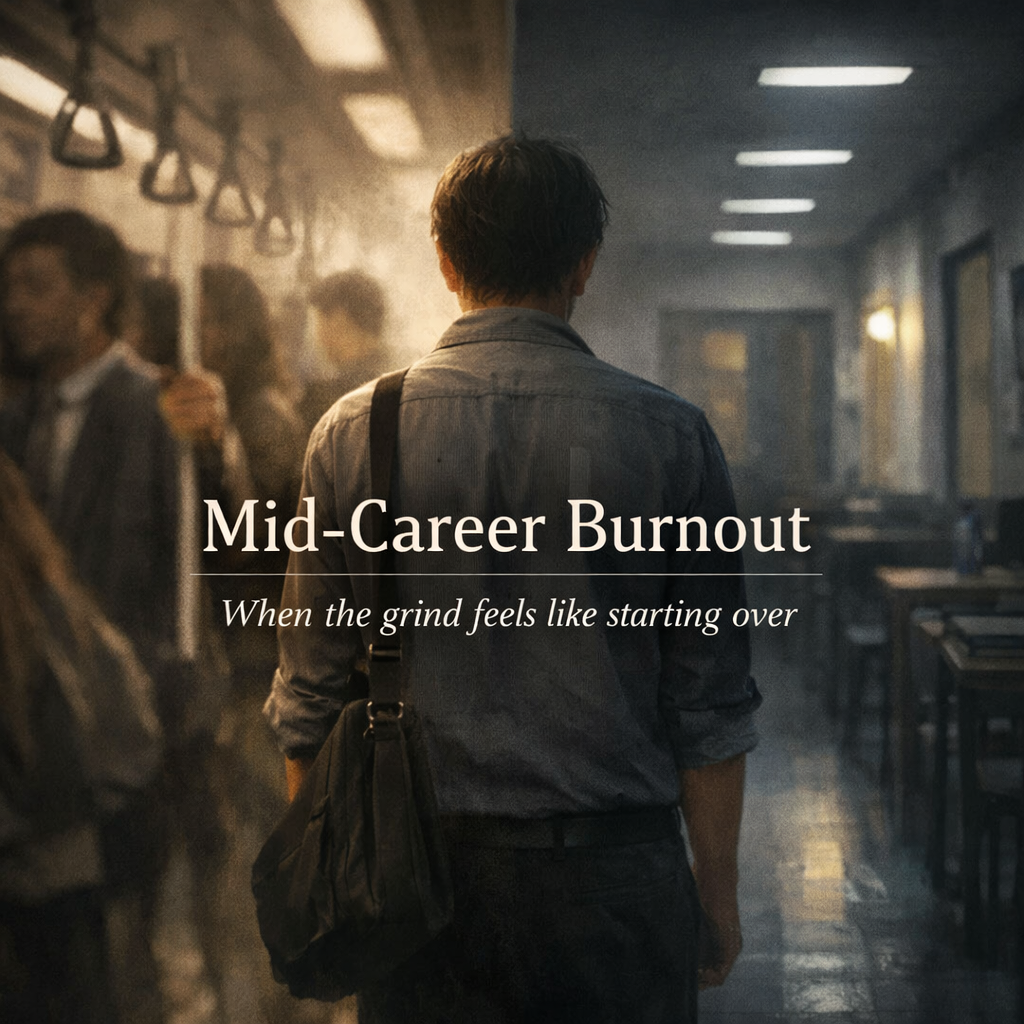
“Why do I wake up with this sinking dread, forcing myself to that office every single day? This relocation didn’t just move me—it shattered everything I’d built over more than a decade: my cozy home, my easy routine, my peace. Now it’s back to square one—squeezed on crowded buses, dragging my exhausted body through the same grind. My heart aches questioning if this career was ever worth the soul-crushing toll. Should I just quit? Switch paths? Or am I trapped forever in this bonded labour, chained by my financial fears, watching my dreams suffocate while the bills keep coming?”
If you’re a teacher staring at the same lesson plans, a principal drowning in admin, a manager buried in endless meetings, or a coach pushing teams through pressure—this inner monologue might sound familiar. Mid-career relocations, role changes, or sustained high demands hit hard. You’re not failing; you’re human in demanding roles where quiet burnout builds unnoticed.
Signal 1: Emotional and Physical Exhaustion
It starts subtly: constant fatigue despite sleep, relying on public transport because driving feels overwhelming, small routines disrupted. You push through parent meetings, performance reviews, or team huddles, but your body signals overload—irritability creeps in, evenings blur into recovery mode. In schools, PSUs, or corporates, this gets normalized as “busy season,” masking the toll.
Signal 2: Detachment from Purpose and Values
Work that once lit you up—mentoring students, driving team wins, shaping policies—now feels hollow. “What’s the point?” whispers your mind during commutes. The mission (student success, organizational growth) fades behind survival mode. High-stakes roles amplify this: you’re detached, going through motions without the passion that fueled your rise.
Signal 3: Reduced Sense of Efficacy
After years climbing to principal, manager, or coach, a shift makes you feel rookie-level ineffective. “All my progress reset,” you think, as simple decisions drag and outputs feel subpar despite effort. Performance holds, but confidence erodes—you question your expertise amid new systems or teams.
These aren’t personal weaknesses; they’re common in relentless environments. Leaders, educators, and managers often dismiss them as “part of the job,” letting burnout simmer.
The Power of Reflective Supervision
Create protected space—a 30-minute weekly pause with a trusted peer, mentor, or coach. Not therapy, but structured reflection: unpack the load, reconnect to your “why,” spot strain early. One principal shared: “It felt like hitting refresh—clarity returned, purpose reignited.” In fast-paced schools or offices, this buffers pressure, sustaining impact without crisis.
Pair It with a Short Recharge Break
Check your leave: most roles offer 20-30 earned days plus casuals. Take 3-4 days—hometown visit, nature walk, or solo reset. Use it reflectively: Day 1 rest, Day 2 journal wins, Day 3 plan one small boundary. It’s realistic renewal, not indulgence, restoring energy for demanding roles.
Pause now: Which signal resonates most? What one reflective step will you take this week?