
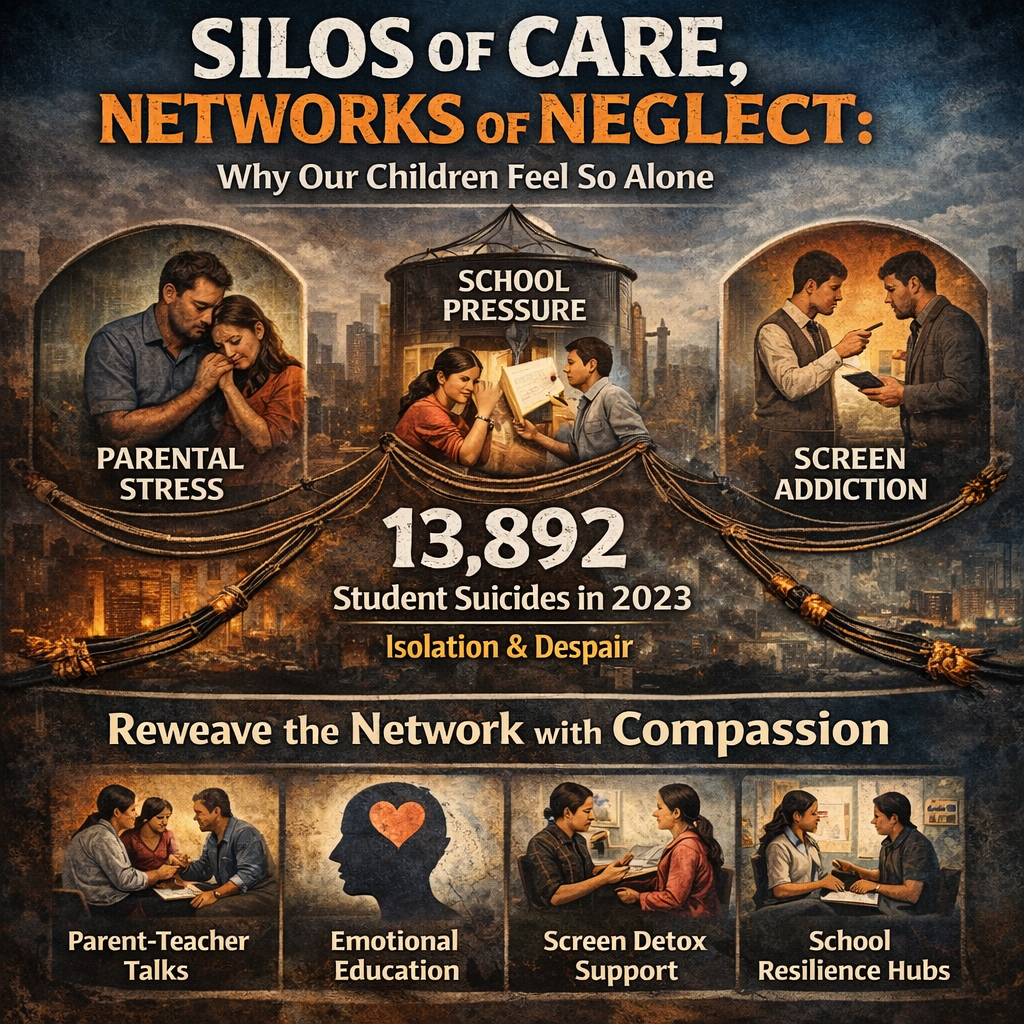
To the grieving parents of Shourya Patil and sisters Nishika (16), Prachi (14), Pakhi (12): Your love was real, yet it slipped through exhausted fingers. To the teachers at St. Columba’s and the Ghaziabad family: You nurture in silos—lessons planned, homes provided—but in the vital interplay, signals crossed, and our children paid. NCRB data screams the toll: Student suicides hit 13,892 in 2023, up 65% in a decade, outpacing national rises—NCR kids like these, isolated amid screens and stress.
These aren’t failures of intent, but of connection. Compassion first: All adults are working hard in fragmented roles. Let’s heal the network.
Education: Siloed Discipline Misses the Cry
Shourya, 16, jumped from Delhi’s Rajendra Place Metro on Nov 18, 2025, after teachers mocked his stage fall as “drama,” ignored tears, threatened expulsion despite parent pleas. Parents supported his dance dreams and bought ice cream that morning—yet missed the cumulative weight. Teachers enforced order, the principal observed—but no joint huddle caught the despair in his note: “St Columba’s teachers did this… Donate my organs.”
Girls hadn’t attended school 2 years post-COVID, scribbling “I am very, very alone” on walls, diary worshipping K-pop/K-dramas over family. With the community absent, parents tried phone curbs—too late.
The Miss: Parents and teachers share joint duty, but silos prevail. UNESCO life skills (empathy, stress coping) untrained in Indian teacher ed; parents lack tools amid work grind.
Lifestyle: Screens as Addiction, Not Luxury
Post-pandemic, mobiles morphed from luxury to lifeline. Girls played Korean task-games non-stop 2.5-3 years, internalizing aliases, resenting Bollywood for siblings—”Korea is our life.” Abrupt bans felt like identity theft.
Research proves: Excessive screens trigger dopamine floods, rewiring reward circuits like cocaine—weakening prefrontal cortex for emotional regulation, fostering craving over coping. Hyperarousal desensitizes to real stimuli, starves neural paths for deep thinking/relationships—emotional bankruptcy. Kids withdraw, virtual highs masking loneliness till withdrawal snaps.
Shourya sought escape too; both cases: Stimulus dependency eroded resilience. Screens? Addiction for vulnerable brains, not harmless fun.
The Network Collapse: Joint Responsibility Failing
| Stakeholder | Their Silo Effort | Interplay Gap | Research Link |
|---|---|---|---|
| Parents | Financial stability, pleas to school/home curbs. | No co-strategy with teachers; missed addiction cues. | Family stress tops student suicide drivers. |
| Teachers | Academic push, stage prep. | Shaming sans empathy; no parent sync. | EI gaps in training amplify harm. |
| Community/School | Oversight expected. | Absent interventions for dropouts/addicts. | 30% youth suicides from isolation. |
All correct in isolation; together, loneliness wins. Kids forced inward—virtual stimuli dulling real bonds.
Changes: Reweave the Network with Compassion
-
Joint Parent-Teacher Pacts: Quarterly “Emotional Check” meetings—share screens/sighs early.
-
EI Mandates: Train via UNESCO skills + Gita compassion; pilot in UP/Delhi B.Ed.
-
Screen Sanity: Gradual detox protocols—counselors guide, not seize; build offline tribes.
-
Policy Nets: School “Resilience Hubs” (1:200 counselors), NCRB-tracked audits.
-
Cultural Fill: Family rituals revive sneha—stimulus-free spaces for neural healing.
Shourya, Nishika, Prachi, and Pakhi: You deserved a network, not neglect. Parents/teachers: You’re not villains—you’re vital. Unite, or lose more. Future Icons pledges awareness; join us.
Compassionate reform starts here. Share your silo story below.